

Why self-care is easier to talk about than to practice (even for therapists)
As a counsellor, I regularly talk with clients about the importance of self-care. We explore rest, boundaries, emotional wellbeing and the impact of chronic stress on mental health. I genuinely believe self-care is essential….and yet….like many people who support others for a living, I don’t always follow my own advice. This might sound surprising, but it’s actually very common.
Knowing what helps our mental health doesn’t automatically make it any easier to do it.
I believe it is helpful to acknowledge that I, too, can be a bit lax with my self-care. It removes a lot of pressure on a client, knowing you don’t have to “do it perfectly,” and opens the door to a more compassionate approach.
Why Self-Care Matters for Mental Health
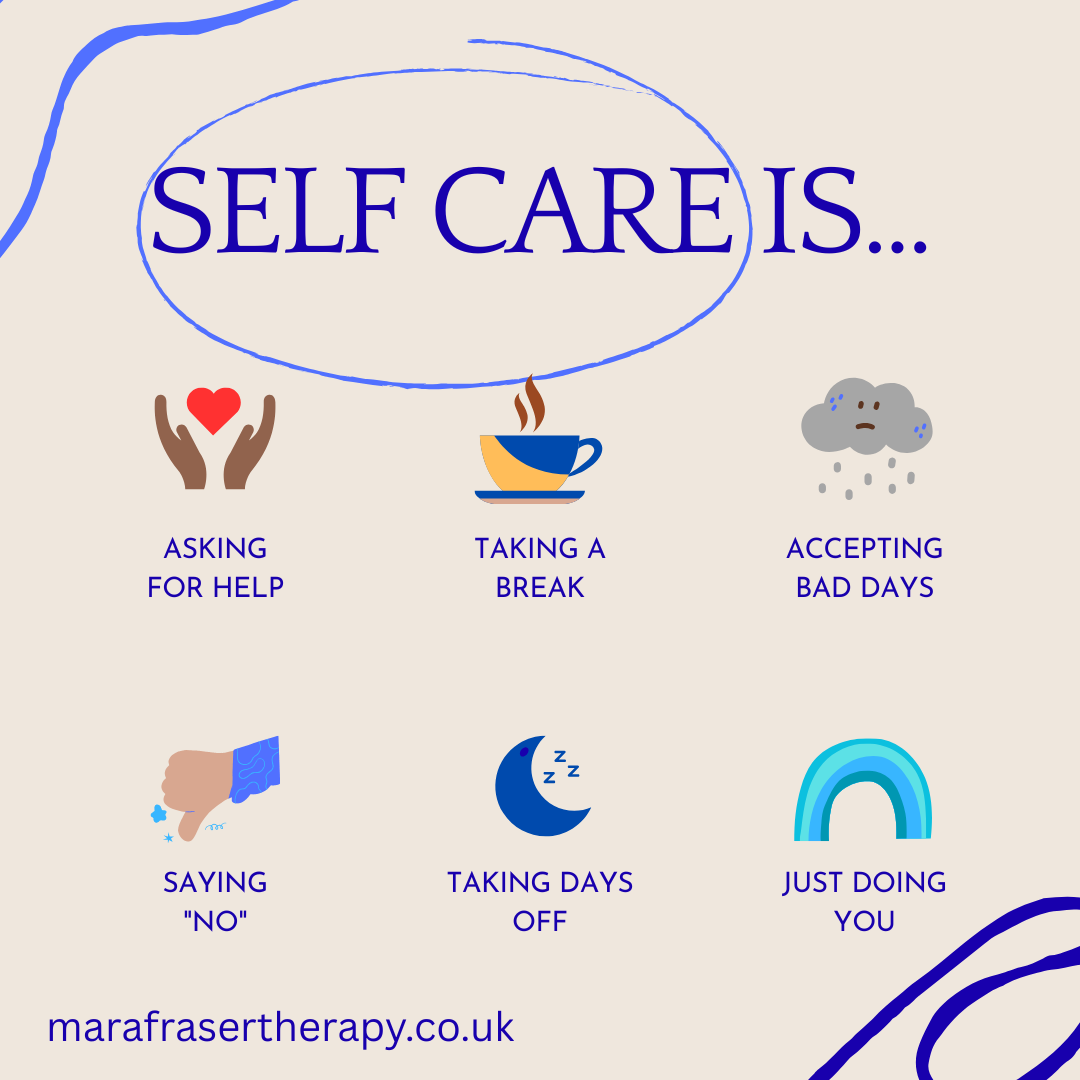
Self-care plays a crucial role in maintaining emotional balance, preventing burnout and supporting long-term mental wellbeing.
Over time, stressors build up, often we don’t even notice it until we start to feel exhausted, or begin to experience low mood, anxiety, irritability or feeling emotionally disconnected.
In online counselling sessions, I often see how people minimise their own needs. Parents, carers, professionals and high achievers are particularly prone to putting themselves last. Unfortunately, ignoring self-care doesn’t make stress disappear; it just delays the inevitable impact.
Why Do So Many of Us Resist Self-Care?
Self-care is often seen as self-indulgent or time-consuming. Social media often presents it as luxurious and unrealistic, which can make it feel inaccessible. For many people (myself included at times), self-care can also trigger guilt or discomfort.
Another common barrier is the belief that self-care must be earned. In reality, taking care of your mental health isn’t a reward; it is a basic requirement for functioning well.
Simple Self-Care Ideas for Reluctant Self-Carers
If self-care feels awkward, forced or overwhelming, starting small is key. Here are some realistic ideas that won’t involve a major lifestyle change:
Taking regular breaks during the day, even if they’re brief.
Eating meals away from your desk or screen
Going to bed 30 minutes earlier than usual
Stepping outside for fresh air or natural light
Reducing notifications or screen time in the evening
Saying “no” without over-explaining
Checking in with yourself emotionally once a day
These small acts of care help regulate the nervous system and build resilience over time.
Reframing Self-Care as Maintenance, Not Luxury
One of the most helpful shifts is viewing self-care as maintenance. If you are a driver, you always factor in your vehicle’s fuel and service needs. We also need our minds and bodies to receive ongoing care and maintenance to function effectively. This mindset often helps clients release guilt and resistance.
A Compassionate Approach to Self-Care
One of the best tips I was ever given is not to aim for perfection. Self-care isn’t about getting it right all the time. It’s about noticing when things feel hard and responding with kindness rather than criticism.
If self-care feels difficult right now, that doesn’t mean you’re failing. It simply means you’re human.
How Can Therapy Help?
Therapy gives you the time and space to explore why you avoid self-care and to recognise when you need to take some time out to regenerate. I would argue that therapy, in and of itself, is a form of self-care. Within a counselling space, you can:
Explore why self-care feels difficult or gets pushed aside
Begin to understand patterns such as burnout, guilt or people-pleasing
Work to develop realistic self-care habits that actually fit your life
Build compassion for yourself and work towards taking the pressure off
If you’re curious about how therapy could support your self-care, I offer a free consultation call. This is a relaxed, no-obligation opportunity to ask questions and see if online counselling feels right for you.